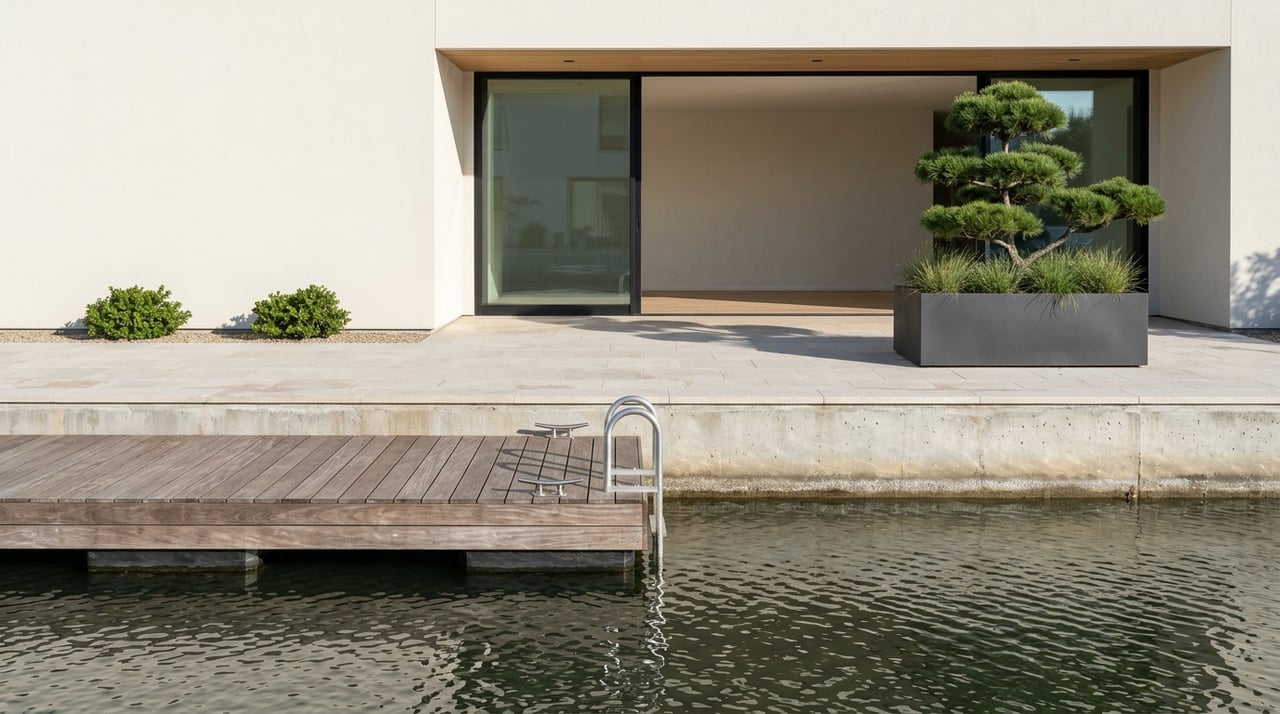
If you are shopping for a lagoon home in Beach Haven West, the view is only the beginning. This is one of those markets where two homes that look similar online can feel very different once you study the dock route, flood profile, elevation history, and infrastructure details. If you want a clearer way to evaluate the lifestyle and the risks, this guide will walk you through what matters most before you buy. Let’s dive in.
Beach Haven West Basics
Beach Haven West is an unincorporated community and census-designated place in Stafford Township, not Beach Haven Borough. According to Stafford Township, the lagoon development began in 1945, opened in phases starting in 1957, and grew into New Jersey’s largest lagoon development with more than 3,600 homes.
That scale matters because Beach Haven West is not just a handful of waterfront streets. A 2023 township safety audit describes it as the largest waterfront community in New Jersey, with a geography set between Route 72, Barnegat Bay, and the Edwin B. Forsythe National Wildlife Refuge.
Why Buyers Choose Lagoon Living
For many buyers, the appeal is simple. You get direct waterfront access in a setting that is closely tied to boating, bay recreation, and the broader Jersey Shore lifestyle.
The same township audit reports a year-round population of 4,729, a median age of 57.5, and about 48% of housing used seasonally, recreationally, or occasionally. That mix helps explain why Beach Haven West often attracts second-home buyers and boaters who value access to the water more than a dense, walkable layout.
It is also helpful to understand how daily movement works here. The audit notes limited sidewalks, a car-oriented road network, and no fixed-route transit inside the community, so most errands and outings depend on driving.
Lagoon Layout Changes the Experience
One of the biggest buyer mistakes is treating every lagoon street the same. Stafford Township workshop materials show the community was built in phases, including areas between Morris Boulevard and Jennifer Lane, between Jonathan Drive and Walter Boulevard, and along Mill Creek Road toward East Point.
That phased growth means streets can differ in route, width, turns, and distance to open water. In practical terms, two homes may both advertise lagoon frontage, but one may offer a much easier boating path than the other.
What Boaters Should Check First
If boating is part of your plan, focus on the full route from the dock to the bay. New Jersey State Police rules require slow speed or no wake when passing marinas, piers, docks, bridge openings, and through lagoons or canals less than 200 feet wide.
That rule matters because convenience on the water is not only about dock length. It is also about how many turns you make, whether you pass through narrower sections, and how long it takes to reach more open water.
NJDEP describes Barnegat Bay as a 75-square-mile estuarine system used by recreational boaters each summer, while also stressing the need to use marked navigational channels. For you as a buyer, that means the boating lifestyle here can be excellent, but the property-level route still deserves close review.
Dredging and Navigability Matter
Water access is never a set-it-and-forget-it feature in a lagoon community. Stafford Township’s 2026 dredging notice shows active maintenance in Beach Haven West, with dredging planned to an elevation of -5.0 feet mean low water.
That is a positive sign for long-term use, but it also shows that navigability is an ongoing issue, not a permanent guarantee. Before you buy, it is smart to ask how the specific lagoon has been maintained and whether future work could affect timing, access, or nearby conditions.
Home Condition Can Vary Street by Street
Beach Haven West has a wide mix of housing stock. Some homes are original 1950s or 1960s structures, some have been renovated over time, and some were rebuilt or elevated after Superstorm Sandy.
Because the community developed in phases and resiliency efforts have shaped later improvements, condition can vary a lot from one block to the next. You may find one property with older systems and lower elevation next to another with a more recent rebuild profile.
That is why it helps to look beyond finishes. A beautiful kitchen matters, but so do the age of the structure, the elevation strategy, and how the home has been maintained for waterfront ownership.
Property-Level Checks Before You Offer
In Beach Haven West, the small details often have the biggest impact on long-term satisfaction. Before you make an offer, it helps to verify a few basics carefully.
Check the dock-to-bay route
Confirm how the boat actually leaves the property and reaches open water. Look at turns, waterway width, possible bridge openings, and whether the lagoon is a dead-end or a through-route.
Review elevation and rebuild history
Ask whether the home is original, renovated, or rebuilt after Sandy. Elevated homes may present a different ownership profile than older low-lying structures.
Understand utility responsibility
Stafford Township says it maintains the water system only to the curb stop or meter pit, with property owners responsible beyond that point. That makes line condition and maintenance history important during due diligence.
Ask about sewer and infrastructure work
The township is still funding Beach Haven West sewer rehabilitation, including an $11.263 million Phase 6 project, a $4.5 million Phase 8 authorization, and a $500,000 Phase 9 engineering ordinance. Ongoing public work can support the area long term, but you should still ask how nearby work may affect ownership costs, timing, or disruption.
Flood Risk Is a Core Buying Factor
In Beach Haven West, flood risk is not a side topic. It is one of the main parts of evaluating any purchase.
Stafford Township participates in FEMA’s Community Rating System and says its Class 5 rating can provide residents with up to a 25% discount on NFIP flood insurance premiums. The township also says staff can help determine flood zones, explain flood insurance requirements, and assist with elevation certificates.
That support is useful, but the real takeaway is this: you should review each lot on its own merits. A broad neighborhood reputation is not enough when flood exposure, elevation, and insurance costs can change from property to property.
What New Jersey Sellers Must Disclose
New Jersey now requires more direct flood-risk disclosure. NJDEP says that beginning March 20, 2024, sellers must disclose whether a property is in FEMA’s Special Flood Hazard Area or Moderate Flood Hazard Area, along with any actual knowledge of flood risk.
This gives you a better starting point, but it should not replace your own due diligence. It is still wise to compare seller disclosures with flood-zone information, elevation details, and the home’s history of improvements or repairs.
Insurance Questions to Ask Early
Flood insurance should be part of your planning before you go under contract, not after. FEMA says an elevation certificate shows first-floor height and helps assess flood risk, and homes in high-risk A or V zones with federally backed mortgages generally require flood insurance.
It is also important to know that standard homeowners insurance does not cover flood damage. The National Association of Insurance Commissioners notes this clearly, and NFIP policies usually have a 30-day waiting period unless the policy is purchased with a new home.
For many buyers, the practical move is to price insurance early and ask for documents upfront. That way, you can compare homes with a fuller picture of monthly and long-term ownership costs.
Resiliency Is Part of Ownership Here
Coastal ownership in Beach Haven West also means paying attention to the bigger environmental picture. NJDEP says sea level rise is projected to reach or exceed 2.1 feet above 2000 levels by 2050, and its flood-risk tool notes that FEMA maps are historical and do not fully account for climate change or heavier precipitation.
That does not mean you should avoid the market. It means you should evaluate each property with more precision and with a longer-term view.
Stafford Township’s resiliency work includes lagoon water quality efforts, sewer maintenance, watershed management, monitoring, bioswales, tide-gauge work, and flood mitigation. Those efforts show active local management, but they also remind you to watch future capital projects and permit activity as part of ownership planning.
Daily Living Still Requires Practical Planning
Even though many buyers think of Beach Haven West mainly as a boating community, it still functions as a full-service suburban area. Stafford Township places Beach Haven West in a zone that receives regular bulk trash and recycling service, which is a useful day-to-day ownership detail.
The area also connects naturally to broader Shore travel patterns. Stafford Township notes that the Route 72 bridge to Long Beach Island, built in 1957, remains the only road egress to the island, reinforcing how closely the community is tied to coastal recreation and regional traffic flow.
A Smart Buying Strategy for Beach Haven West
If you want to buy well in Beach Haven West, think beyond the listing photos. Focus on how the home works as a waterfront asset, how the boat route fits your lifestyle, and how flood, elevation, and infrastructure details shape the true cost of ownership.
The buyers who make the best decisions here usually ask better questions early. They verify the route to open water, review the flood profile, understand whether the home is original or elevated, and get clear on utility and sewer responsibilities before they commit.
If you are considering a lagoon home and want a more strategic second opinion on how to compare properties, Ten Hoeve Advisory can help you evaluate the details with clarity and confidence.
FAQs
What is Beach Haven West in Stafford Township?
- Beach Haven West is an unincorporated community and census-designated place in Stafford Township, Ocean County, known for its large lagoon-home layout and direct connection to Barnegat Bay boating.
What makes Beach Haven West different from Beach Haven Borough?
- Beach Haven West is a separate community in Stafford Township on the mainland, while Beach Haven Borough is on Long Beach Island.
Why does the dock-to-bay route matter for Beach Haven West homes?
- The route affects boating convenience because lagoon width, turns, bridge openings, dead-end waterways, and no-wake rules can all change how easily you reach open water.
What should buyers inspect in a Beach Haven West lagoon home?
- Buyers should review the home’s age, rebuild or elevation history, dock route, flood profile, water and sewer responsibilities, and any signs of ongoing infrastructure or maintenance needs.
Are Beach Haven West homes in flood zones?
- Many properties in this waterfront area require careful flood-zone review, and New Jersey sellers must now disclose whether a property is in FEMA’s Special Flood Hazard Area or Moderate Flood Hazard Area, along with known flood risk.
Does homeowners insurance cover flooding in Beach Haven West?
- Standard homeowners insurance does not cover flood damage, so buyers should review flood insurance requirements and pricing early in the process.
Is Beach Haven West good for second-home buyers and boaters?
- The township’s housing-use data and waterfront layout make it especially relevant for second-home buyers and boaters who value water access and coastal recreation.